
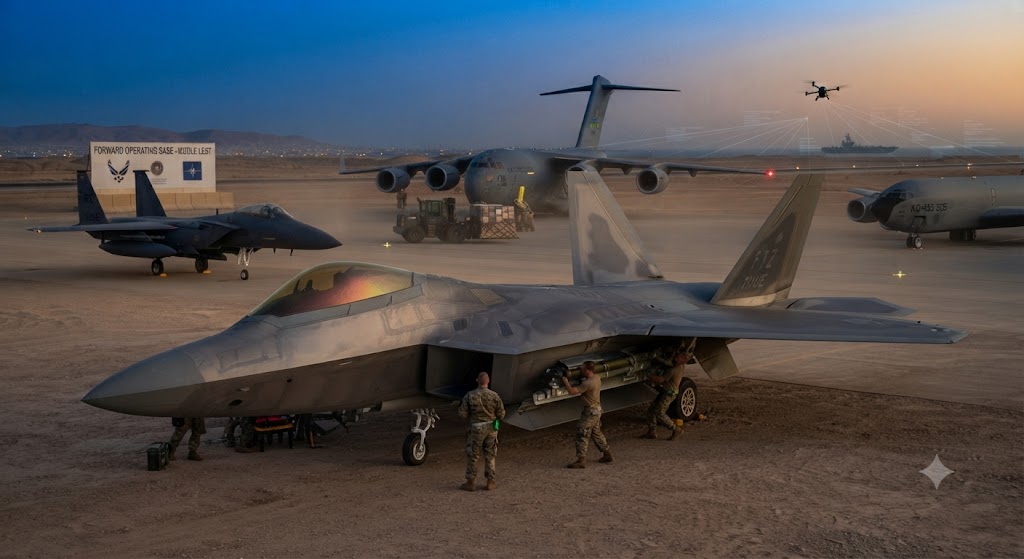
ANKARA, TÜRKİYE — Following the high-stakes conclusion of the 2026 NATO Summit in Ankara, the United States Air Force has initiated a massive strategic deployment to the Middle East. The dynamic movement of air assets comes amid a broader military buildup in the region, signaling a united alliance focus on securing critical international shipping lanes and reinforcing regional stability.
The deployment marks a significant transition from the alliance-wide focus on European defense production discussed during the summit to immediate, proactive force projection in theater.
Strategic Airlift and Logistics Surge
According to open-source flight tracking and military logistics reports, the air operation includes an unprecedented surge of heavy transport aircraft and aerial refueling assets. More than 30 C-17 Globemaster III transports and heavy C-5M Galaxy aircraft have been mobilized to deliver specialized ground support equipment, tactical gear, and personnel to forward operating locations.
To maintain continuous long-range capabilities, a robust network of refueling tankers has been established. The deployment heavily relies on:
- KC-135 Stratotankers: Sustaining extended-range flight operations across transit corridors.
- KC-46A Pegasus Tankers: Providing advanced, multi-point aerial refueling to allied fighter fleets.
High-Tech Air Superiority and Maritime Vigilance
The aviation deployment is heavily integrated with fifth-generation fighter platforms and electronic warfare assets. Frontline combat deployments feature F-22 Raptor stealth air superiority fighters alongside F-15E Strike Eagles, positioning rapid-response capabilities directly within the Central Command (CENTCOM) area of responsibility.
This deployment directly aligns with major defense initiatives unveiled at the NATO Summit Defence Industry Forum, which emphasized rapid multi-domain command-and-control capabilities and high-altitude maritime surveillance to safeguard strategic global chokepoints.
Comprehensive Inter-Branch Cooperation
The Air Force’s arrival coordinates closely with multi-national naval maneuvers in nearby waters. Operating in tandem with three separate Carrier Strike Groups currently stationed across the Mediterranean, Red Sea, and Arabian Sea, the joint operation establishes a comprehensive deterrence network.
As diplomatic leaders leave Ankara following agreements on expanding collective defense capabilities, the immediate activation of these air corridors underscores the alliance’s readiness to transition policy commitments into rapid, real-world deployment.


Leave a Reply